
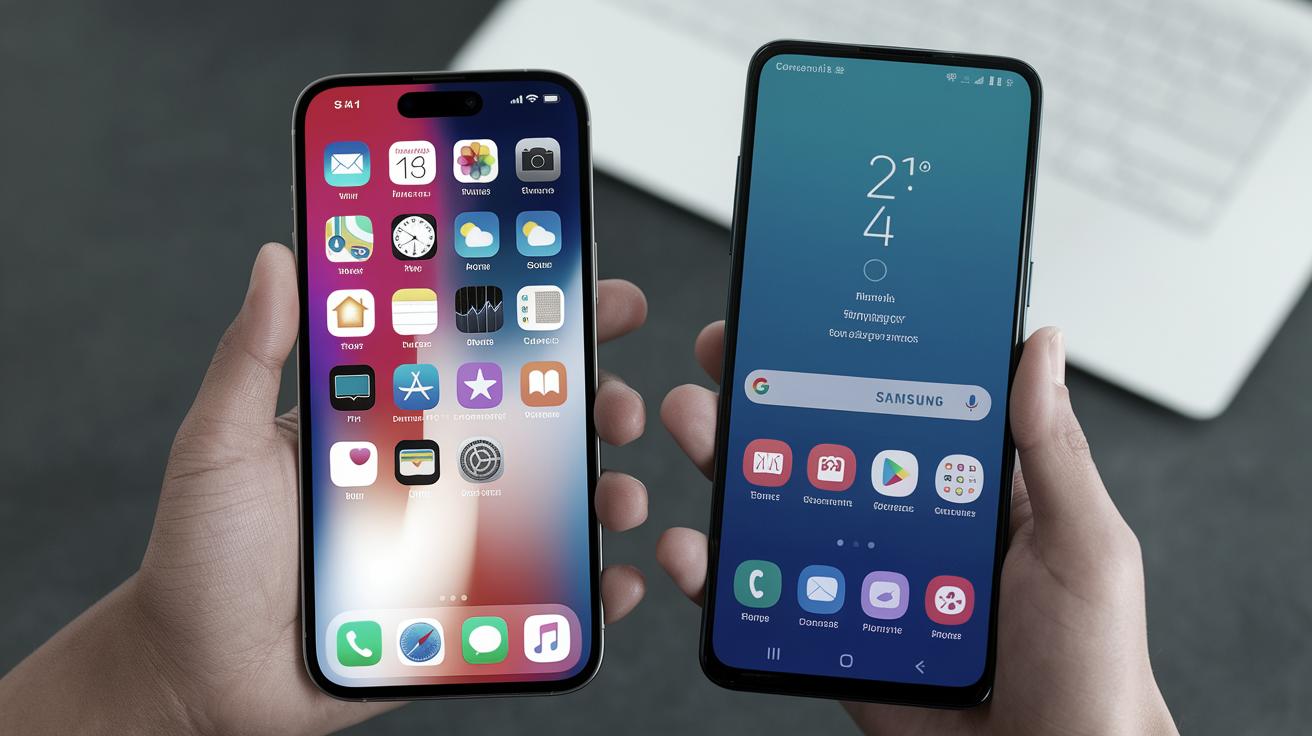
The smartphone battle between iPhone and Samsung continues to define mobile technology in 2025, with each brand offering distinct advantages for different user preferences.
Design Philosophy and Build Quality Comparison
Apple’s iPhone maintains its signature premium aluminum and glass construction with consistent design language across all models. The 2025 iPhone lineup features refined titanium builds that enhance durability while maintaining the sleek aesthetic Apple users expect. Samsung’s Galaxy series offers diverse design approaches, from the ultra-premium S25 Ultra with its distinctive S Pen integration to the foldable Z series that pushes design boundaries.
Build quality remains exceptional for both manufacturers, though they target different market segments. iPhone’s unified design philosophy ensures consistent user experience, while Samsung’s varied approach caters to specific user needs and preferences across price points.
Operating System Performance and User Experience
iOS 19 delivers seamless integration across Apple’s ecosystem with enhanced privacy controls and AI-powered features. The closed-system approach ensures optimized performance and consistent security updates for up to seven years. Samsung’s One UI 7.1 built on Android 15 offers extensive customization options with improved multitasking capabilities and enhanced Samsung DeX functionality.
Performance benchmarks in 2025 show both platforms excelling in different areas. iPhone’s A18 Bionic chip delivers superior single-core performance, while Samsung’s Snapdragon 8 Gen 4 provides exceptional multitasking capabilities and gaming performance.
Software Update Longevity
Apple continues providing 5-7 years of iOS updates with consistent feature rollouts across all supported devices. Samsung has significantly improved its update commitment, now offering 7 years of Android updates for flagship Galaxy devices, matching Apple’s longevity promise.
Camera Technology and Photography Capabilities
iPhone’s computational photography excels in natural color reproduction and video stabilization, with the new 48MP main sensor delivering exceptional low-light performance. The ProRAW format and Cinematic mode continue setting industry standards for mobile content creation.
Samsung’s camera system offers versatility and innovation with up to 200MP sensors, advanced zoom capabilities reaching 100x Space Zoom, and AI-enhanced night photography. The Galaxy S25 Ultra’s camera array provides professional-grade manual controls that appeal to photography enthusiasts.
Video Recording and Content Creation
Both platforms now support 8K video recording with advanced stabilization. iPhone’s ProRes video format remains the gold standard for professional mobile filmmaking, while Samsung’s Director’s View and Single Take features offer creative flexibility for social media content creators.
Ecosystem Integration and Device Connectivity
Apple’s ecosystem advantage remains unmatched with seamless integration between iPhone, iPad, Mac, Apple Watch, and AirPods. Features like Universal Control, AirDrop, and Continuity create a cohesive user experience that increases productivity and convenience.
Samsung’s ecosystem has expanded significantly with Galaxy Watch integration, Samsung Buds, and improved connectivity with Windows PCs through Samsung DeX. The SmartThings platform provides comprehensive smart home control that rivals Apple’s HomeKit functionality.
Battery Life and Charging Technology
iPhone 16 Pro models deliver all-day battery life with optimized power management and support for 30W fast charging. MagSafe wireless charging has evolved to 25W, providing convenient charging solutions for Apple users.
Samsung Galaxy devices offer superior charging speeds with 45W wired charging and 15W wireless charging capabilities. The larger battery capacities in Samsung devices often provide longer usage times for heavy users, particularly in gaming and multimedia consumption.
Wireless Charging and Power Sharing
Both manufacturers support reverse wireless charging, allowing users to charge accessories or other devices. Samsung’s PowerShare feature offers higher output power, while iPhone’s MagSafe ecosystem provides more precise alignment and accessory compatibility.
Security and Privacy Features
iPhone’s privacy-first approach includes App Tracking Transparency, on-device processing for Siri requests, and hardware-level security with the Secure Enclave. iOS 19 introduces enhanced privacy controls and advanced anti-tracking measures.
Samsung Knox provides enterprise-grade security with hardware-backed protection and secure folder functionality. The Galaxy series includes biometric authentication options including ultrasonic fingerprint sensors and improved facial recognition technology.
Pricing Strategy and Value Proposition
iPhone pricing remains premium with the base iPhone 16 starting at $899, while Pro models reach $1,299. Apple’s strong resale value and extended software support justify the higher initial investment for many users.
Samsung offers broader price range options from $299 Galaxy A-series to $1,399 Galaxy S25 Ultra. The diverse lineup ensures Samsung devices are accessible across different budget segments while maintaining flagship features in premium models.
Trade-in Programs and Financing Options
Both companies offer competitive trade-in programs with Apple providing up to $800 credit for older iPhones and Samsung offering similar values for Galaxy devices. Financing options include 0% APR programs that make premium devices more accessible.
Gaming Performance and Mobile Entertainment
iPhone’s A18 Bionic chip delivers console-quality gaming performance with support for ray tracing and advanced graphics rendering. Apple Arcade provides premium gaming experiences without advertisements or in-app purchases.
Samsung Galaxy devices excel in mobile gaming with larger displays, higher refresh rates up to 120Hz, and advanced cooling systems. Game Booster optimization and partnership with gaming companies provide enhanced gaming experiences.
Artificial Intelligence and Smart Features
Siri has evolved significantly with on-device processing and improved natural language understanding. iOS 19 integrates AI throughout the system for predictive text, photo organization, and personalized recommendations.
Samsung’s Bixby and Google Assistant integration provides dual AI assistance with specialized Samsung device controls. Galaxy AI features include real-time translation, advanced photo editing, and intelligent automation across Samsung’s ecosystem.
Showdown in Paradise
When discussing smartphone giants, it’s impossible to overlook the battle between Apple’s iPhone and Samsung’s Galaxy series. Each introduction of new models from these two brands evokes a digital duel, showcasing cutting-edge technology, design innovation, and software advancements. Apple is celebrated for its sleek aesthetics and integration within its ecosystem, providing a seamless user experience across devices. Conversely, Samsung is lauded for diversity in its lineup, offering a range of devices that cater to various user needs, from budget-friendly options to state-of-the-art flagship models.
Apple’s iPhones are synonymous with quality control and consistent performance. With its iOS ecosystem, iPhone users enjoy timely software updates and a robust suite of proprietary apps that are often tailored specifically for Apple devices. Meanwhile, Samsung utilizes Android’s open-source nature, thus allowing greater customization and flexibility. Samsung’s use of features like expandable storage and versatile camera capabilities cater to those who desire a personalized touch in their device handling.
Sustainability and Environmental Impact
Apple has committed to carbon neutrality by 2030 with recycled materials comprising 75% of iPhone components. The company eliminated plastic packaging and uses 100% recycled rare earth elements in key components.
Samsung’s Galaxy for the Planet initiative focuses on sustainable packaging and responsible sourcing. The company has reduced packaging size by 30% and incorporates recycled ocean plastic in Galaxy device construction.
Get Daily Insight, Inspiration and Deals in Your Inbox
Staying updated with tech trends and advancements in the smartphone industry is essential for enthusiasts and informed consumers alike. Newsletters and daily updates offer a unique opportunity to receive tailored content that covers everything from emerging technologies to exclusive deals and innovative applications just as they reach the market. For iPhone lovers and Samsung aficionados, these insights not only keep you informed about brand-specific updates but also about cross-industry shifts that might influence your next purchase.
Subscribing to dedicated newsletters allows enthusiasts to dive deeper into the aspects they care about most, whether it be Samsung’s AI-driven ventures or Apple’s sustainability efforts in production. By staying in the loop with daily insights, readers can catch glimpses of upcoming products, furnishing them with both inspiration and strategic foresight. Smart purchasing is often dictated by timely information that anticipates next-gen developments, and newsletters can be key to unlocking that foresight.
5G Connectivity and Network Performance
Both iPhone and Samsung devices support advanced 5G connectivity with mmWave and sub-6GHz bands. iPhone’s custom modem design optimizes battery efficiency during 5G usage, while Samsung’s superior antenna design often provides better signal reception in challenging environments.
Network performance testing in 2025 shows comparable speeds between both platforms, with variations depending on carrier optimization and regional network infrastructure. Both manufacturers work closely with carriers to ensure optimal 5G performance.
You Might Also Like
If the debate between iPhone and Samsung piqued your interest, there are several related topics that might capture your curiosity. Exploring the evolution of smartphone operating systems provides an excellent backdrop for understanding the philosophical and technical differences between iOS and Android platforms. Likewise, a deep dive into the design aesthetics of these brands reveals insights into their cultural and functional impacts on global markets.
Furthermore, exploring tech stories that highlight breakthrough technologies, such as 5G integration or advances in mobile accessory ecosystems, can enrich your understanding of the broader tech landscape. These stories not only shine a light on current trends but also offer predictions about where the industry might be heading, potentially reshaping how we interact with our devices and with each other.
Accessibility Features and Inclusive Design
iPhone’s accessibility leadership includes VoiceOver screen reader, Switch Control, and AssistiveTouch features. iOS 19 introduces enhanced voice control and improved motor accessibility options for users with disabilities.
Samsung’s accessibility suite provides Voice Assistant, Sound Amplifier, and Live Transcribe functionality. The Galaxy series includes high contrast displays and customizable interface options for users with visual impairments.
You Must Confirm Your Public Display Name Before Commenting
Engaging in online discussions about tech preferences, innovations, and forecasts necessitates a respectful and accountable approach. Platforms often require users to confirm their public display names before contributing comments. This measure not only fosters a sense of community but also ensures that conversations remain constructive and respectful.
As you prepare to share your opinions and insights on the iPhone versus Samsung debate, remember that your contribution helps shape the discourse surrounding technology today. By participating with a confirmed public identity, you enhance the reliability and civility of discussions, facilitating a more enriching and informed community dialogue. Your feedback, whether it’s endorsing a feature or critiquing a shortcoming, is vital in driving innovation and addressing user demands in future smartphone iterations.
Future Innovation and Technology Roadmap
Apple’s future roadmap includes advanced AR capabilities, improved Siri intelligence, and potential foldable iPhone development. The company continues investing in custom silicon development and health monitoring technologies.
Samsung’s innovation focus centers on foldable technology advancement, enhanced AI integration, and expanded ecosystem connectivity. The company’s research into under-display cameras and advanced battery technology promises exciting developments.
Future Prospects
| Aspect | iPhone | Samsung |
|---|---|---|
| Design & Build | Known for premium aesthetics and a cohesive design language. | Diverse designs catering to a broad range of styles and preferences. |
| Operating System | iOS – seamless integration and timely updates. | Android – customizable and flexible user experience. |
| Camera Capabilities | Renowned for computational photography and consistent quality. | Advanced options with versatility and cutting-edge features. |
| Ecosystem | Offers a seamless experience across Apple devices and services. | Provides a versatile ecosystem with varied hardware and software integration. |
| User Experience | Consistency and simplicity are key. | Customization and broadened functionality. |
| Innovation | Focuses on a closed, cohesive system with controlled innovations. | Pushes boundaries with experimental features and partnerships. |
| Battery Life | Optimized power management with all-day performance. | Larger capacity batteries with faster charging speeds. |
| Price Range | Premium pricing with strong resale value retention. | Broad price spectrum from budget to ultra-premium options. |
| Security | Hardware-level security with privacy-first approach. | Enterprise-grade Knox security with biometric options. |
| AI Integration | On-device processing with enhanced Siri capabilities. | Dual AI assistance with specialized device controls. |
Making the Right Choice for Your Needs
The decision between iPhone and Samsung ultimately depends on individual preferences, usage patterns, and ecosystem requirements. iPhone excels for users prioritizing seamless ecosystem integration, consistent software updates, and premium build quality.
Samsung devices appeal to users seeking customization flexibility, diverse price options, and cutting-edge features like foldable displays. Both platforms offer exceptional performance and capabilities that satisfy the vast majority of smartphone users in 2025.